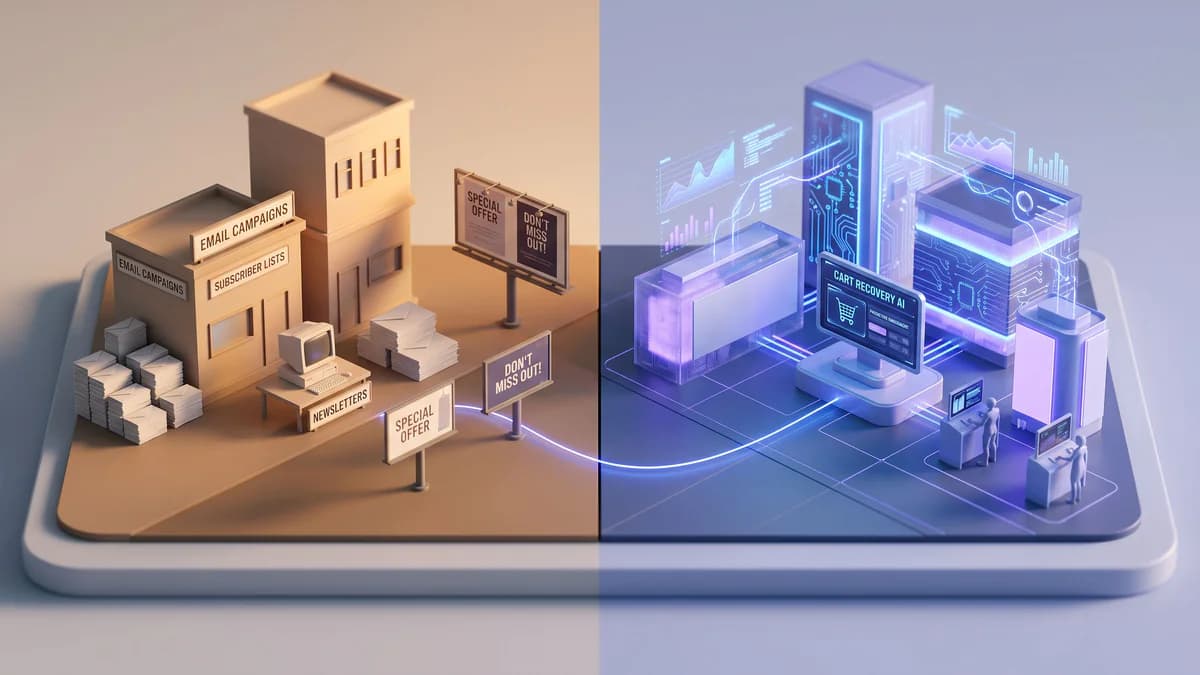
If you're still treating all your customers the same way, you're leaving revenue on the table. The shift from generic shopping experiences to AI personalization has fundamentally changed how e-commerce conversion works in 2026, according to Bloomreach. AI personalization drives a 5-15% revenue lift, with top performers reaching 25%, and the difference between brands that deploy this technology and those that don't is no longer a competitive advantage, it's a structural necessity.
The question isn't whether AI personalization works. The data is clear. The question is how to implement it strategically across your entire customer journey to maximize both conversion rates and long-term customer lifetime value.
What You'll Need
Before diving into implementation, you'll need several foundational elements in place:
- Customer data infrastructure - A system that captures behavioral signals (browsing, clicks, purchase history, cart activity, device type, timing)
- AI-powered personalization platform - Tools that can process real-time data and make dynamic recommendations at scale
- Email and SMS automation - Multi-channel infrastructure for personalized messaging across touchpoints
- Analytics and testing framework - Ability to measure conversion lift, AOV changes, and customer lifetime value improvements
- Product data layer - Clean, structured product information that feeds recommendation engines
- Checkout and cart recovery tools - Integration points for intercepting abandonment and delivering personalized interventions
The technical stack matters less than the strategic approach. What separates winning brands from competitors is how systematically they connect these pieces.
Step 1: Implement Real-Time Behavioral Personalization
Real-time behavioral personalization is where the highest-leverage conversion gains happen in 2026. This goes far beyond inserting a customer's first name into an email. AI continuously interprets real-time signals like browsing behavior, purchase history, stated and inferred intent, timing, and device context to create an experience that adapts to each individual in the moment.
The mechanics work like this: as a visitor lands on your site, the AI system processes dozens of signals simultaneously. What products did they view last session? How long did they spend on specific categories? Did they abandon a cart previously? What device are they on? What time of day is it? All of this feeds into dynamic content decisions.
The implementation sequence matters:
- Capture the data - Install tracking that records user behavior without violating privacy regulations. Focus on first-party data (logged-in users, email captures, server-side events).
- Build the segments - Create behavioral segments beyond demographics: high-intent browsers, repeat visitors, cart abandoners, price-sensitive shoppers, luxury buyers.
- Define the rules - Decide what content, products, and messaging each segment sees. A returning customer who browsed but didn't buy should see different homepage content than a first-time visitor.
- Test and iterate - A/B test different personalization approaches. Measure conversion rate, average order value, and bounce rate for each variant.
Modern ecommerce engines analyze micro-behaviors in real-time, including tracking scroll depth, hover time over specific product images, and even the speed of navigation to adjust the product feed dynamically. If a user hovers over three different blue dresses but doesn't click, the AI instantly recognizes the preference for the color but the rejection of the style, updating the homepage in milliseconds to show more relevant options.
This level of responsiveness is what converts browsers into buyers.
Step 2: Deploy AI-Driven Product Recommendations and Dynamic Content
Product recommendations are the single highest-leverage personalization tactic available. Product recommendations alone drive up to 31% of eCommerce revenues, with sessions showing 369% AOV increases. But there's a critical distinction between rule-based recommendations and AI-powered ones.
Rule-based systems show "customers who bought X also bought Y." They're static and predictable. Research across 34 client migrations from rules-based to ML-driven recommendation engines found an average 41% increase in recommendation click-through rate and a 23% lift in downstream conversion when testing is done systematically.
Machine learning models work differently. They analyze hundreds of variables simultaneously:
- What the customer viewed (not just what they bought)
- How long they spent on each product
- Which products they compared side-by-side
- Their price sensitivity based on past purchases
- Seasonal and temporal patterns
- Similar customers' behavior
- Real-time inventory and margins
The result is recommendations that feel personalized because they are. They're not guesses; they're predictions based on patterns the AI has learned from thousands of similar shoppers.
Implementation steps:
- Choose your recommendation engine - Evaluate platforms that support collaborative filtering, content-based filtering, and hybrid approaches. Most modern platforms use neural networks trained on your specific customer data.
- Define placement strategy - Where do recommendations appear? Homepage, product detail pages, cart page, post-purchase emails. Each placement has different performance characteristics.
- Set up A/B testing - Test recommendation algorithms against your current baseline. Measure click-through rate, conversion rate, and average order value lift.
- Monitor for drift - Machine learning models degrade over time as customer behavior changes. Set up monitoring to track model performance and retrain regularly.
Step 3: Master AI Cart Abandonment Recovery
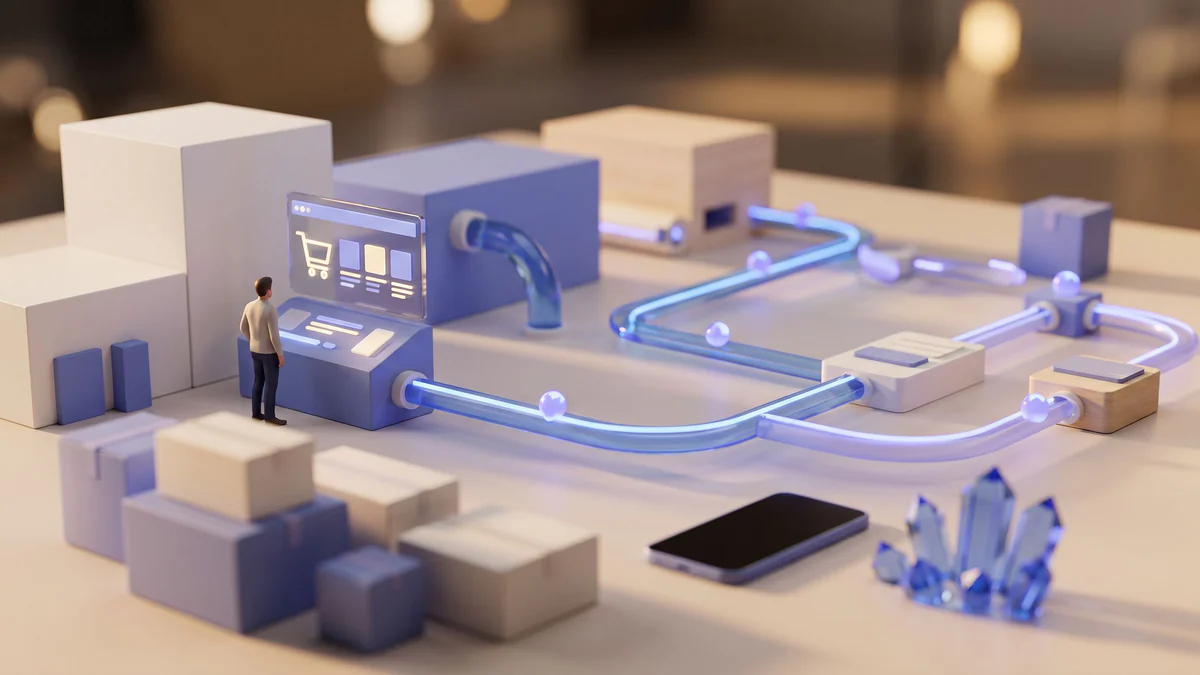
Cart abandonment represents the single largest revenue leak in e-commerce. The average cart abandonment rate across all industries remains 70.19% in 2026, translating to $260 billion in potentially recoverable revenue in the US alone.
But here's the critical insight: not all abandonment is recoverable. Causes 1 through 9 are friction causes that recovery sequences cannot solve. A $12 shipping fee that caused abandonment is still $12 when the recovery email arrives. Roughly half of cart abandonment is due to checkout friction (shipping costs, forced account creation, long forms). The other half is due to hesitation, distraction, or comparison shopping, and that's where AI recovery sequences excel.
The winning approach combines prevention and recovery:
Prevention (Reduce abandonment before it happens):
The combined impact of guest checkout, reduced form fields, and free shipping transparency typically reduces abandonment by 25-35%. This is your first lever. Implement:
- Guest checkout option (no account required)
- Show total cost upfront (including shipping and taxes)
- Reduce form fields to the minimum necessary
- Enable Apple Pay and Google Pay (eliminates form friction for opted-in users)
- Optimize for mobile (test that checkout loads in under 3 seconds)
Recovery (Win back the 35-40% that are recoverable):
AI-optimized three-email sequences can recover 15-30% of abandoned carts versus 5-8% for basic email-only programs, according to Triplewhale. But the sequence timing and content matter enormously.
The optimal cadence is:
-
Email 1 (1 hour after abandonment) - Simple reminder with no discount. The shopper may have been distracted or lost connection. Approximately 60% of all recovered revenue comes from the first email alone, according to Ecomposer.
-
Email 2 (24 hours after abandonment) - Introduce social proof (reviews, purchase counts, low-stock indicators) and gentle urgency. Still no discount. 25% of recovered revenue comes from the second email.
-
Email 3 (72 hours after abandonment) - Final chance with a personalized incentive. AI determines the minimum effective discount per customer rather than offering a blanket 10% code. 15% of recovered revenue comes from the third email.
Beyond email, multi-channel recovery amplifies results. When brands combine email and SMS recovery campaigns, recovery rates can increase to 8.4%-24.3%. Add SMS at 15 minutes and push notifications for mobile app users, and you're capturing attention across multiple channels at the moments customers are most likely to return.
Step 4: Build Omnichannel Personalization for Consistent Experience
The highest-performing brands in 2026 don't personalize in silos. They orchestrate personalization across every customer touchpoint: site, email, SMS, paid ads, and post-purchase.
Personalization is no longer limited to product recommendations. AI now determines what content a customer sees, what offer is worth extending, what messaging tone is most likely to resonate, and when and where to engage, while ensuring consistency and relevance across site search, email, messaging, and post-purchase interactions.
This requires:
- Unified customer data - A single source of truth for customer information across all systems
- Segmentation logic - Rules that determine which customers see which experiences based on behavior and attributes
- Message orchestration - Tools that decide which channel to use for which message and when to send it
- Suppression rules - Logic that prevents message fatigue (don't email someone who just received an SMS, don't retarget someone who just converted)
The compounding effect is significant. Cross-channel integration amplifies impact with multi-channel personalization generating 126x higher user sessions and 6.5x more purchases when combining 4+ channels.
Tips for Success
Focus on data quality first. Garbage in, garbage out. Before deploying AI, audit your data. Are customer records merged correctly across systems? Is behavioral tracking accurate? Are product attributes complete? Spending 2-3 weeks on data cleanup before launching personalization returns 10x the effort.
Start with your highest-value segments. Don't try to personalize for everyone simultaneously. Start with segments that have the highest conversion potential: returning customers, high-value buyers, abandoned cart shoppers. Prove ROI on these segments first, then expand.
Measure incrementally. Use holdout tests to measure true incremental lift, not just correlation. A/B test personalization variants against control groups. Track not just conversion rate but also average order value, customer lifetime value, and return rate.
Plan for privacy compliance. AI-powered personalization achieves significantly higher conversion rates compared to rule-based approaches, but it requires customer data. Ensure compliance with GDPR, CCPA, and other regulations. Use first-party data (logged-in users, email, server-side tracking) rather than relying on third-party cookies.
Invest in the team. 71% of brands are likely to hire employees dedicated to AI-related ecommerce functions within the next 12 months. You'll need people who understand data, can interpret results, and can communicate with both technical and non-technical stakeholders.
Common Mistakes
Over-personalization that feels creepy. Showing a customer a product they looked at 6 months ago is useful. Showing them something they searched for but didn't click on can feel invasive. Balance personalization with privacy expectations.
Ignoring the checkout experience. You can personalize your way to 70% of the way there, but if checkout is broken, you won't convert. Fix checkout friction before investing heavily in personalization.
Treating personalization as a one-time project. AI models degrade over time. Customer preferences change. Seasonal patterns shift. Personalization requires ongoing monitoring, testing, and optimization. Allocate 20-30% of your personalization budget to maintenance and improvement.
Failing to segment by traffic source. A customer from organic search has different purchase intent than a customer from a paid ad. A returning customer has different needs than a first-time visitor. Use traffic source, device type, and customer history as segmentation variables.
Not measuring true incrementality. Correlation isn't causation. Just because personalized users convert higher doesn't mean personalization caused the conversion. Use holdout tests to measure true lift. Compare test groups against control groups that don't receive personalization.
Conclusion
AI personalization in 2026 is no longer experimental. 67% of marketing and sales teams report revenue increases from AI in the past 12 months, and the brands that haven't deployed systematic personalization are competing at a structural disadvantage.
The path forward is clear: start with real-time behavioral personalization on your highest-traffic pages, deploy AI-driven product recommendations across your site, implement multi-channel cart recovery sequences, and orchestrate the entire experience across channels for consistency.
The ROI compounds. Early gains fund further investment. Each iteration improves your data quality, which improves your AI models, which improves your results. Brands that start this journey in 2026 will have a significant advantage by 2027.
The question isn't whether to invest in AI personalization. It's how quickly you can implement it and measure results.
Ready to transform your e-commerce conversion strategy with AI-powered personalization? Let's discuss how we can help you increase conversions, reduce cart abandonment, and build a sustainable competitive advantage, according to Domo.
Learn more about marketing services for Houston businesses.
Schedule Your Free Call